
How AI Voice Cloning and Facial Mapping Work: Demystifying the Photorealism of AI Digital Twins

Quick Take
Beyond the Uncanny Valley: Modern digital twins no longer rely on rigid deepfakes or 3D wireframe masks. Deep neural rendering models micro-expressions down to the sub-pixel level.
Acoustic Nuance (ElevenLabs): State-of-the-art voice synthesis models capture pitch variance, breath pauses, and emotional cadence rather than flat synthetic syllables.
Synchronous Coherence: The breakthrough lies in phoneme-to-viseme mapping—ensuring speech acoustics and lip/muscle contractions align in real time.
Introduction: The Death of the "Robotic" Avatar
Two years ago, synthetic video was easy to spot: stiff head turns, glassy, unblinking eyes, and flat speech cadence reminiscent of GPS navigation voices.
For high-profile executives, attaching a low-grade avatar to their name was an unacceptable brand risk.
In 2026, the technology crossed the inflection point.
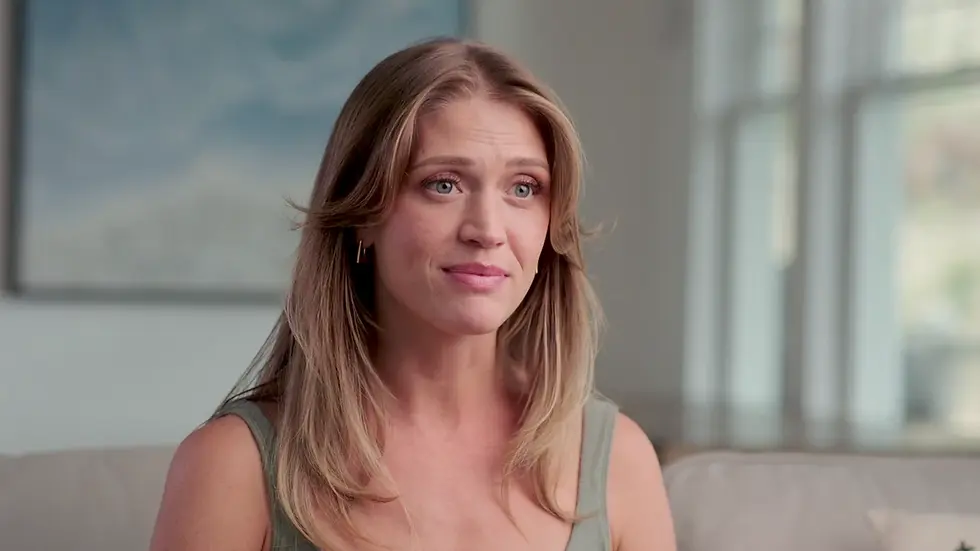
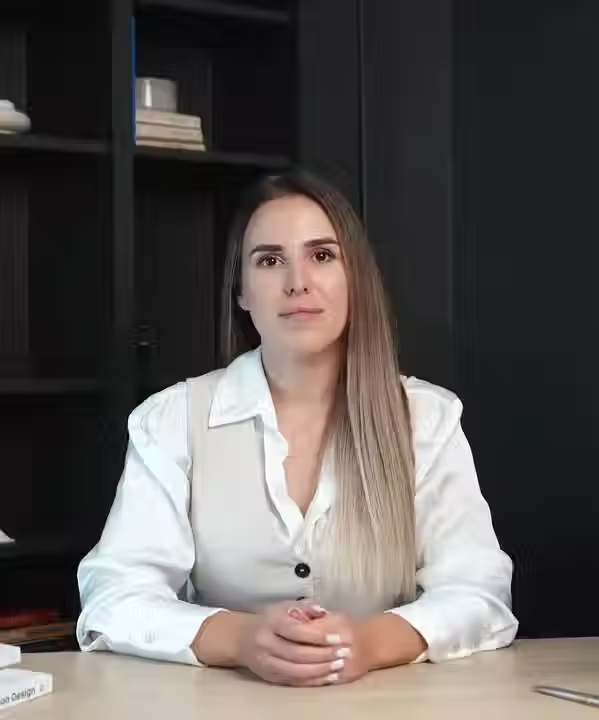
High-fidelity AI Digital Twins now achieve parity with real studio capture. When deployed correctly, audiences focus entirely on the strategic insight rather than questioning the medium.
To understand why this leap happened—and why leading B2B executives now rely on automated video—we must examine the underlying mechanics: voice cloning, neural facial mapping, and temporal consistency.
Pillar 1: Acoustic Neural AI Voice Cloning (ElevenLabs & Voice Engines)
Traditional Text-to-Speech (TTS) simply concatenated pre-recorded sound snippets together, resulting in awkward rhythm and mechanical cadence.
Modern voice cloning uses transformer-based neural acoustic AI voice cloning models:
[ Clean Audio Sample (3-5 Mins) ] ──► [ Latent Space Vector Extraction ] ──► [ Dynamic Prosody Engine ]
1. Latent Audio Embeddings
During initial calibration, the algorithm isolates the speaker’s unique acoustic fingerprint:
Formant Frequencies: The physical shape of vocal cords and resonance cavities.
Glottal Pulses: The subtle vibrations and natural rasp in vocal delivery.
Prosody & Intonation: The rise and fall of pitch across sentences.
2. Micro-Pauses and Breath Modeling
Human speech is defined by its imperfections: micro-hesitations, breath intakes before a strong assertion, and subtle vocal inflections on key words. Advanced engines synthesize natural micro-breaths dynamically based on sentence syntax, eliminating the monotonous drone of legacy software.
Pillar 2: Facial Geometry and Phoneme-to-Viseme Synchronization
Creating a believable speaking avatar requires an intricate marriage of acoustics and computer vision.
Acoustic Input (Phoneme: /p/, /b/, /m/) ──► Neural Alignment ──► Visual Output (Viseme: Bilabial Closure)
Phonemes vs. Visemes: A phoneme is a unit of sound; a viseme is its corresponding visual mouth and lip configuration. A neural network maps phonetic timestamps directly to 3D facial muscle groups.
Sub-Pixel Muscular Deformation: When an individual pronounces the letter "O," it isn't just the lips that round—the cheeks pull inward, and subtle wrinkles form beneath the lower jaw. Modern models replicate these secondary muscle contractions.
Pupil Dilation and Natural Micro-Movements: The human brain is hypersensitive to the "uncanny valley." Believable digital twins continuously incorporate involuntary actions: slight head tilts, eye saccades, natural blink rates (15–20 times per minute), and breathing motion through the collarbone and shoulders.
Pillar 3: Lighting, Grain, and Temporal Consistency
The visual failure of early deepfakes stemmed from temporal artifacts: flickering edges around the jawline, inconsistent shadow casting, and resolution mismatch between the head and background.
Dynamic Neural Radiance & Diffusion Post-Processing
Temporal Coherence: Advanced frame interpolation ensures that frame $N+1$ logically matches frame $N$, completely removing temporal shimmer or warping.
Ambient Light Interaction: The digital twin is not merely cut and pasted onto a background. Light matching algorithms evaluate ambient room color temperature, ensuring the skin tone and hair specular highlights blend natively with the virtual setting.
Simulated Optical Characteristics: High-end models simulate true lens optics: natural depth of field (bokeh), subtle cinematic grain, and sensor motion blur when the speaker turns their head.
The Technical Reality: Synthetic Avatar Generations Compared
Feature / Metric | Gen 1 (Stock Avatars) | Gen 2 (Early Deepfakes) | Gen 3 (Modern AI Digital Twins) |
Voice Realism | Robotic & monotonic | Recognizable but flat | Indistinguishable; includes breath & inflection |
Facial Kinematics | Mouth-only animation | Blurry jawlines; jitter | Full secondary muscle motion & eye tracking |
Language Localization | Stilted accent mapping | Unnatural dubbing | Native fluency across 20+ languages |
Setup Time | Instant (Generic) | Days of compute | 48-Hour initial calibration |
B2B Executive Viability | Unusable | Risky / Low-Trust | Enterprise Standard |
Why Quality Calibration Matters for B2B Leaders
Using an uncalibrated, low-cost synthetic avatar can actively damage your personal brand. If viewers sense distortion, cognitive friction spikes, and your message is lost.
Deploying a custom-calibrated, high-end digital twin achieves the opposite:
Saves 8–10 hours per week otherwise spent on lighting, multiple takes, and editing.
Allows you to produce 5 strategic videos a week without touching a camera.
Preserves your exact authority, tone of voice, and professional prestige across global feeds.
Conclusion: The Machine Serves the Message
AI Digital Twins are not designed to replace authentic founder thought leadership; they are designed to remove the physical bottleneck of distribution.
When the voice sounds exactly like you, the visual movement mirrors your natural cadence, and the lighting is cinema-grade, technology fades into the background. All that remains is your strategic conviction.
Experience High-Fidelity Executive CloningCurious what your voice, facial mannerisms, and leadership presence look like when scaled through a custom neural engine? The Alter Studios builds photorealistic AI digital twins tailored exclusively for founders and executives.


Comments